Showing posts with label This Economy. Show all posts

Thursday, May 10, 2012

Road Side Margaritas


Road Side Margaritas
by Jeanné M. Tatro

On my way home from school yesterday, I was thinking of waiting until I got closer to my town to get an iced coffee from Dunkin Donuts, but the weather was so nice and I was thirsty and couldn't wait. While driving, I was thinking that I would stop at the first Convenience store and buy a Root Beer. After finally making that decision, there was an ice cream cart on the side of the road set up in the Juncos and Cavey resteraunt parking lot. I was going to drive past it, but while sitting at the red light, I noticed a sign that said Pina Coladas. Suddenly, I couldn't resist it and was curious. So I decided to stop by and get one.

While talking to the person on duty, I found out that it was Alvin Woods, from Alvin's All-Natural Ice Cream which was developed at STCC's Technology park back in late 1999, early 2000. They were able to develop it and get it into some area supermarkets like BigY and Stop and Shop. He tried to compete with some major brands and it was unsuccessful, so in 2007, they tried the Open Air Ice Cream Concept in the Springfield Area, since the market was open for that idea. 


“We just opened another location in Forest Park at the X. We now have 2 locations. We sell fresh pina coladas, tropical sorbets and all-Natural Ice Cream. Everything is made from scratch. Everything is basically organic, it just doesn't have the organic label. Hopefully we can penetrate the market and establish a home base here in Springfield and continue STCC's Entrepeneurial Institute's success rate.” said Alvin.

“Being in the service community, selling a world class product, speaks for itself. Once they taste it, they love it. The price is family-friendly, especially in this particular neighborhood. I think we have a successful model that we can grow on.” Alvin added.

Odaliz Breton has been aware of Alvin's Ice Cream for about three or four weeks now and was at the location ordering when he told me that he likes it because “it's addictive. It keeps him coming back. It's feels natural, it feels like a natural taste. It's local.”

Saturday, December 3, 2011

Proposed Law Will Exempt More IT Employees from Overtime Pay

A bill introduced to congress would define more IT job descriptions that are exempt from overtime pay. 

[Ars Technica]


A bill recently introduced in Congress would greatly expand the exemption to the Fair Labor Standards Act for IT employees, ending overtime benefits for many more types of workers, including network, database and security specialists.
Among other things, the FLSA mandates that employees get time-and-a-half overtime pay for working more than 40 hours in a week, unless they are executives or specifically exempted from the law's protection. There are already many exemptions, and the current text related to IT workers exempts "any employee who is a computer systems analyst, computer programmer, software engineer, or other similarly skilled worker," whose primary duties fall under categories including "systems analysis techniques and procedures," and "design, documentation, testing, creation, or modification of computer programs."
But a bill sponsored by Sen. Kay Hagan (D-NC), titled the "Computer Professionals Update Act," takes the exemption's 131-word text and bumps it up to 205, adding job classes such as database and network specialists and security professionals along the way. The proposed text exempts "any employee working in a computer or information technology occupation (including, but not limited to, work related to computers, information systems, components, networks, software, hardware, databases, security, internet, intranet, or websites) as an analyst, programmer, engineer, designer, developer, administrator, or other similarly skilled worker," with primary duties including "the application of systems, network or database analysis techniques and procedures, including consulting with users, to determine or modify hardware, software, network, database, or system functional specifications."
The bill would also label all employees listed in the exemption as part of the "bona fide executive, administrative, or professional" class exempt from overtime and minimum wage laws. However, the proposed modification keeps the exemption's current text limiting affected employees to those who are on salary or make at least $27.63 an hour.
An IT administrator who blogged about the bill notes that "I think that I may have originally underestimated the importance of this bill to us SysAdmins in the United States…see, I was under the impression that we were almost all salaried and exempt—in other words, that overtime wasn’t an option anyway. I’ve been informed by a couple of friends of mine that this isn’t the case at all, and that there are a lot of hourly SysAdmins who get overtime."
According to Govtrack.us, Hagan's bill was referred to the Committee on Health Education, Labor, and Pensions, on Oct. 20, helpfully noting that "the majority of bills and resolutions never make it out of committee." But if you want to tell Sen. Kagan what you think about limiting overtime pay for IT pros, a contact form is on the senator's website.


Thursday, November 17, 2011

Comtel Plane Passengers Pony Up For Fuel As Airline Goes Broke


Passengers on a Comtel Air charter flight from Amritsar, India to Birmingham, England had to pony up roughly $31,500 for fuel during a stopover in Vienna on Tuesday after the Austrian airline went broke as the plane made the first leg of its flight.
Atm
Comtel Air had only recently begun to offer flights between India and the U.K. The Birmingham Mailreports that as many as 600 people may have been stranded by the company suddenly going bust, though most of those customers were not in the middle of their trip.
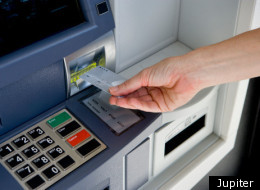
According to the Birmingham Mail, the 180 furious passengers stuck in Vienna sat on the runway for six hours before agreeing with the crew's pleas to disembark. Once on the ground, they were escorted to ATMs, where they withdrew enough money to get the flight back in the air.
Some of the 180 passengers told the Mail they had been "held to ransom," even though they had paid almost $800 on average for tickets. The passengers were apparently so angry with Comtel that Austrian police had to be called to the aircraft.
An English passenger, who had been in India for three weeks, told The Telegraph: "Nobody has told us anything. They wanted all the money in cash. Everyone was furious, that is why we had the sit-in. We spent more than six hours in Vienna."
Comtel has not commented on the incident yet, though the airline's website offers passengers "Austrian charm."
Though it is not clear what happened to the company's finances, it is quite clear that those passengers stranded in the Punjab are going to have a hard time getting home.
"They did not get the information as to what's happening with the airline," a stranded passenger's daughter told the BBC.

Tuesday, July 28, 2009

15 ways stores trick you into spending

15 ways stores trick you into spending

Ever notice how you can go to a store to pick up just one thing and then, by the time you get to the check stand, you have five or six things in your cart and a bigger bill than you had anticipated?

This happens over and over because department stores use an array of techniques (grocery stores use many of the same tactics) to get you to pick up these items. By itself, each technique isn't very strong -- it's the use of them in combination that is powerful.

Here's a list of 15 of the best tricks. After the list, watch for 10 ways to combat these techniques so you can get in and out of stores with your finances intact.

1. Shopping carts. Most department-store customers enter the store intending to buy only an item or two, but the shopping carts are right there by the entrance and, oh, wouldn't it be convenient to have it so I can lean on it a bit while walking around and to put my stuff in it?

The cart has a huge bin compared with the size of most items for sale in the store, making it psychologically easy to toss in an item you don't need -- after all, there's room for plenty more, right?

2. Desirable departments are far away from the entrance. Most of the items I go to a department store to buy, such as light bulbs and laundry detergent, are located many, many aisles from the entrance. This means I spend my time walking by a lot of consumer goods on my way to find the item I want.

Because these consumer goods are effectively marketed to me, there's a good likelihood that I'll spy something that I don't necessarily need and toss it in the cart.

3. The toy section is far, far, far away from the entrance. Naturally, if I take my son to the store, he wants to visit the toy section. He gets excited and starts shouting "Ball! Ball!" to me when we go in because he remembers the enormous plastic balls in the toy section.

I tell him that if he's good, we'll go look at the balls, and at the end of the trip, we usually make our way over there. What do we see? Lots of children in that area, which means that there are parents that follow their children.

4. Impulse-oriented items are near the checkouts. Stores stock the latest DVD releases and "froth" magazines there, along with overpriced beverages and candy.

Why? Because people leaving the store are thirsty, and they're going to be standing in line for a bit, which is the perfect place to hook them with some entertainment options.

5. The most expensive versions of a product are the ones at eye level. Take a look sometime at the arrangement of different choices for a particular product, such as laundry detergent. Almost every time, the most expensive options per unit are placed at eye level, so you see them first when you enter an aisle. The bulk options and better deals are usually on the bottom shelves.

6. Items that aren't on sale are sometimes placed as though they are on sale, without using the word "sale." I noticed this over and over with diapers; the department store would display a rack of them with a huge sign above them displaying the price, but it would be the same price I paid for them a week ago. Unsurprisingly, the diapers displayed like that were always the most expensive kind.

7. Commodity items, such as socks, are surrounded by noncommodity items, such as shirts and jeans. If I'm looking to buy some socks, I have to traverse through a number of racks full of different types of clothing in the clothing section just to reach them.

Why? If my mind is already open to the idea of buying clothes, I would be more likely to look at other clothing items.

8. Slickly packaged items alternate with less slickly packaged items. Look carefully at an aisle of, say, potato chips. The ones with the bright and slick packaging are generally more expensive, which isn't surprising.

But notice that there usually isn't a section of just inexpensive chips -- in most stores, they're sandwiched between more-expensive items. If there is a section of just inexpensive items, they're down by your feet (think about the inexpensive bagged cereals at your local supermarket).

9. Stop, stop, stop. You add items to your cart only if you stop, right? So stores are designed to maximize the number of stops you have to make: aisles in which only two carts can fit, colorful and attractive layouts, escalators and, my favorite of all, sample vendors. Even if it's not conscious to you, every time you stop moving in a store, you increase your chances of putting something into your cart.

10. Staple items are placed in the middle of aisles, nonessential and overpriced items near the end. Why? If you enter an aisle to get a "staple" item (i.e., a high-traffic item), you have to go by the other items twice -- once on the way in and once on the way out. That gives these items two chances to make their pitch at you.

11. Prices are chosen to make comparison math difficult. Instead of selling the 100-ounce detergent for $6 and the 200-ounce detergent for $11 (making it easier to figure out the better deal), they sell the 100-ounce for $5.99 and the 200-ounce for $10.89.

Hey, look, they're basically the same, right, because five is half of 10? Uh, no.

Continued: More tricks and 10 ways to fight back

12. Stuff in bins isn't always a bargain. Higher-end stores will sometimes put items in "bins" to emulate the bargains found at cheaper stores, but the prices are still quite high. They just use the visual cue of a "bargain store" to make you think it is a bargain.

13. High-markup items are made to look prestigious. If you see something in a glass case that has lots of space around it, your gut reaction is to believe that it is valuable and prestigious to own, and for many people it can be as attractive as a light to a moth. The truth is that these items typically have tremendous markup -- you're literally just buying an idea, not a product.

14. The most profitable department is usually the first one you run into. Ever noticed that at Younkers, JC Penney, Kohl's and such stores, the cosmetic department is front and center? That's because it's very profitable, and by putting it in a place where people walk by time and time again, customers are more prone to making a purchase on an item with a very big markup.

15. Restrooms and customer services are usually right by the exit or as far from the exit as possible. Why? If you need to use either one in the middle of a shopping journey, you have to walk by a lot of merchandise to reach the needed service, thus increasing your chances for an impulse buy.

Want to see more? Look at this presentation on the art of department-store layouts to get an idea of how much thought goes into making sure you buy more, particularly those items that are marked up a lot. I didn't even get into some of the more complex techniques, such as sensory marketing, that are more subtle and harder to avoid.

How can I fight back?

Is there any wonder why people end up buying more than they need or buying sizes that are poor deals? With an array of techniques at their disposal, retailers can make a mint.

Had enough? Here are 10 things you can do to fight back against these techniques:

1. Don't use a shopping cart unless you need it. A cart, most of the time, is just a place to put stuff you don't need. If you're carrying a product, you're a lot more likely to consider whether it's a worthwhile purchase.

2. Make a shopping list and stick to it. A list makes you focus on the items you intended to buy. Without it, you are much more prone to wandering and stumbling into "great buys" that you don't really need.

3. Look at nothing but the prices and sizes. That's all the information you really need -- everything else is marketing. Find the one that has the best price for its size, get that one, and move on.

4. Start at the back and work toward the front. If this is an option at all for you based on the store layout, do it. When you go in, head directly for the most distant item, then progress back toward the checkout aisles. If you do it the other way, you're prone to walk more slowly and tiredly toward the front after your shopping is done, leaving you open to lots of impulse buys on the way.

5. Always look at the bottom shelf first. If you've found the section you want, start looking at the bottom shelf first. This is usually where the better per-unit deals are.

6. Don't stop unless you're actively selecting an item. Displays are designed to beg you to stop for a moment and just look, which is often enough to get you to pick out the item. Even if something looks interesting, keep walking. You can study it as you go past and make up your mind later about the item.

7. Never go by an item twice unless absolutely necessary. If you go down an aisle, start at one end and continue all the way out the other. Walking by an item once lets it sink into your short-term memory, giving just a hint of familiarity when you walk by it again, sometimes just enough to persuade you to buy it.

8. Carry a pocket calculator -- or know how to use the one on your cell phone. Do the math yourself to find out what the best buy is because stores try to choose numbers that make drawing false conclusions quite easy.

9. If you don't know for sure that it is a good deal, don't buy because you think it is a good deal. Stores use all kinds of visual cues to make you think something is a bargain when it's not (like the bin trick mentioned above). Don't buy anything because it's a "deal" unless you're sure that it really is an excellent bargain -- just walk away.

10. At the checkout, rethink everything you put in your cart -- and don't hesitate to hand an item to the cashier and say you've changed your mind. Many people seem to have a guilt, or obligation, to buy an item that they've put into their cart. Don't. You're the customer -- you have the right to choose whether to buy. If you find something you don't want to buy, tell the cashier and don't buy it.

This article was written by Trent Hamm, the founder of The Simple Dollar, a blog offering a peek at his recovery from near bankruptcy.

Updated Nov. 28, 2007

Sunday, July 26, 2009

Fotki; Price Going...Going Up!

It seems that the longer you wait, the price will go up...now may be the time to sign up, if you were thinking about it...

While do the never-ending task of cleaning out my emails, I came upon these emails from fotki.com. One on March 8, 2009 was introducing a special membership for $15, while another one from July 24, 2009 introduced a special membership for $20. While increasing the price by only $5 is nothing, it is still something.

March 8, 2009;


Dear Fotkin,Regardless of the climate in your area, Spring is the time for change - so, we decided to change our ways and offer you the Triple Recession Special March Madness Sale! - Starting today and until March 20:Special Annual Membership starting at just $15 a year
Special $5 pricing on all photo products except bags(you can order them my clicking "Order T-shirt, Mug, and more" link on the right side of any of your photos)
Special pricing on all large print formats(we are discounting the already lowest prices in the industry!) :)
What can we say? - Yay? :)Your Fotki Team Fotki.com respects your privacy. You are receiving this email because you have agreed to receive offers and information from us.© 1998-2009 Fotki.com. All rights reserved. You are subscribed to Fotki News.
July 24, 2009;

Our dear Fotki members!Summer is here, and whether it's HOT in your area or COOL, Fotki.com is having a hot sale at cool prices, dedicating it to Midsummer 2009!That's right, starting today, and until the last minutes of August 15, we offer you the SUMMER FUN of Fotki Premium membership at these cool prices, starting at just $20 a year (when you buy 3 years of Premium service)!Click here to become a Premium member, or to extend your Fotki Premium membership for up to three more years.And have a great Midsummer Fun.Your Fotki Team :)Fotki.com respects your privacy. You are receiving this email because you have agreed to receive offers and information from us.© 1998-2009 FOTKI INC. All rights reserved. You are subscribed to Fotki News.

Sunday, July 5, 2009

Another Business; Crazy Mountain is forced to shut its doors...

With all the bad news of the economy, another store is forced to shut its doors, I really hope they will be able to make a comeback in the future.


Crazy Mountain Shuts Its Doors

Courtesy of Giftware News: In early February, Crazy Mountain Imports of Imlay City, Michigan, well-known in the giftware industry, was forced to close its doors when its bank called its loan. According to sources, the bank the company had dealt with for about 10 years was purchased by another bank, and loan officers familiar with Crazy Mountain's loans and business were let go. Loan problems ensued and the bank ultimately called the Crazy Mountain loan. To cover the loan, the company's assets were turned over to the bank and Crazy Mountain shut its doors.